Advanced Aeroponics
(previously published in Maximum Yield Magazine)

Setting up for success
Successful aeroponic cultivation is relatively simple if certain environmental parameters are met. For example, if the water temperature never reaches above 64°, bad biology and enemies of aeroponics such as algae and root rot can hardly begin to grow, much less thrive.
Maintaining water temperatures below 64° requires keeping ambient room temperatures below 72° and this is quite a challenge, especially in summertime. A water chiller may be necessary to keep the reservoir cool. It may also be necessary to invest in air conditioning or more efficient lighting to shield the root chamber from the heat caused by some grow lights. Many unseasoned aeroponic growers overlook this and accidentally allow their roots to cook in between spray cycles. They eventually notice the plants are struggling, with early stages of rotting roots that have likely contracted Oomycetes aka “water molds” such as Pythium or Phytophthora. These problems are also commonly found in hydroponic systems when water temperatures are not kept at a reasonable level. However, because aeroponic roots are dangling in the air with no medium to act as a buffer providing an advantageous microclimate where evaporative cooling can occur, aeroponic systems are much more susceptible to these types of problems. You may hear warnings from growers that tried aeroponics and it killed their crop. They likely allowed their water temps or root chamber to reach excessive levels or overlooked maintaining a healthy system. The important thing is to be aware of these risks. The saying, "with higher risks comes higher rewards" applies here. If you give the plants, and more specifically, the roots the environment they want - aeroponics systems can greatly outperform others.
Troubleshooting
If plants begin to slow their growth and vigor, this is the first sign of the need to pay closer attention. Pay attention to the environment first. What are the temperature and humidity levels? Are these parameters providing the plants with the environment they need to grow? What works with soil, soilless or hydroponic gardening may not work as well with aeroponics since the roots are exposed and hanging in the air. The growth chamber is located under a grow light and can be heated up even more than the surrounding air. For this reason, the reservoir temperatures must be kept lower so that the water can cool the roots when they are sprayed. Roots are typically misted every 1-4 minutes, so they can be kept at the proper temperature by the cooler water in the reservoir. When plants look like they are suffering, act quickly because there is likely a problem with the environment, pathogens or pests.
It is true that spraying the roots with an aeroponic system will help to avoid root aphids, fungus gnats etc. from laying eggs on the roots in the mist pattern, but it does not completely prevent these types of pests. They will still find ways to reproduce in an aeroponics system by finding areas to lay their eggs that are safe from the spray. Be on the lookout for common grow room problems, but especially keep a close eye on the roots. They need to be healthy and thriving at all times in order to maximize the benefits offered from aeroponics.
Discoloration can occur when using certain nutrients that have a tint to their color, such as humic or fulvic acids and organically mixed nutrients. For this reason, coloration is not as important of a factor as general root health and vigor. This can be seen by observing the ends of the roots to verify that they are healthy and growing new tips that are able to easily uptake water and nutrients. In addition to browning, roots beginning to rot will develop a slime coating and immediately lose their vigor.
Clogged nozzles are perhaps the most common problem associated with aeroponics and are completely avoidable by following the steps suggested here within. The reason nozzles clog is usually due to infrequent cleaning of filters, pumps, tubing and fittings. A common occurrence is for the gardener to let the system dry out after harvesting and before clean up. This will lead to nutrient salts accumulating on the inside of the plumbing parts. When the system is turned on again, these salts break apart and the solids can easily block the nozzle orifice. Often nozzles will clog before harvesting if the filter is not kept clean. Clean the filter in between sprayings, or temporarily power off the pump, leaving the filter assembly submerged in order to prevent air from entering the lines.
Maintaining a healthy system
Maintaining a healthy aeroponics system can be achieved by keeping a sterile reservoir and grow system or by inoculation and maintenance of beneficial biology (beneficial bacteria and fungi) into the reservoir and grow system. Both of these methods will maintain a healthy system that is free of pathogens, even though they are virtually opposite from one another. In a sterile system, growers use H2O2, enzymes, or similar products with their nutrient mix or in between feedings in order to keep a sterile system. On the other end of the spectrum is the inoculation of good biology to prevent the bad biology from getting started. When there are beneficial fungi spores and beneficial bacteria present, they compete for the same food as the bad biology. They can easily take a strong hold and prevent the bad biology from ever getting started growing.
Whether using a sterilization method or inoculating with good biology, the bad biology must be kept at bay one way or another. If it is not, it is only a matter of time until the system is contaminated and the plants begin to suffer. This is why it is extra critical to maintain correct water temperatures and prevent the kind of environment that bad biology can thrive in.
Cloning
In order to have consecutive successful runs in an aeroponic cloner, plan to thoroughly clean the cloning system in between. This is often overlooked and a likely cause of most problems. Over time, neoprene inserts begin to accumulate unwanted pathogens and should be replaced. Another thing to pay close attention to is the water temperature. As mentioned previously, bad things grow in water that is above 64 degrees. Internal pumps often overheat the water, so use a timer to allow the pump to cool. Just be sure the area around the stems where roots will eventually grow is kept relatively humid. Another trick to cool systems using submersible pumps is to add frozen water bottles, which act as ice cubes to cool the water. There are also more technical options such as external high pressure aeroponics (HPA) pumps and misting nozzles, which allow for further control of the fine water droplets as they are delivered to the fragile cuttings.
During cloning, the stems must be kept wet to allow for proper root development. As roots develop, a timer may be used but it is suggested to have increased spray times during this initial period. After roots are 3- 4 inches long and have begun to branch out, dialing back spray times will allow for increased root development, as well as prevention of problems arising from root rot, which is usually brought on by overwatering.
Growing until harvest
Extended longevity of plants in an aeroponics system is often a challenge. Just as plants can grow more rapidly, things can also turn for the worst more quickly, as compared to other methods of growing. In other words, plants perform better when things are right but are less forgiving when things go wrong. For this reason, many aeroponic gardeners use the sea of green (SOG) method, which in short, is growing small, uniformed plants that make up a sea of green. Growing shorter plants allows for faster crop turn over, further accentuating the benefit of increased growth rates achieved by aeroponics.
Whether growing small or large plants, aeroponically grown plants must be pampered and remain happy throughout the entire process in order to maximize yield and quality. Many expert aeroponic growers will reduce their spray times to mimic nature and seasonal changes. For example, in early stages of growth, we are mimicking the springtime, as plants want more water. As vegetative growth occurs more rapidly, the plants will have increased transpiration and thus increased watering needs.
Later in the plants' life cycle, they will begin to drink less water. Notice how in late summer and autumn, there is typically less rainfall than what occurred in the spring? The plants are now ripening and not as aggressively growing as before. So, spraying the roots for shorter "on" times and keeping the same "off" times, or perhaps even slightly increasing off times as the harvest begins to ripen will both provide the plants with the moisture they need and prevent issues that occur with over watering.
LPA
Low Pressure Aeroponics (HPA) utilizes submersible pond style pumps that move a large volume of water at a low pressure. Usually these setups utilize 360° spray nozzles and a manifold. Some LPA systems use a sprinkler style product made of tubing with holes cut in it.
Critics of LPA call it a version of nutrient film technique or shallow water culture recirculating hydroponics. In a way, each are true but it is indeed aeroponics. After all, there is little medium in the small net pots, which only act as an anchor for the plant, allowing the roots to hang in the air within the root chamber and to be sprayed with water. Experienced growers know that aeroponics produces great results and outperforms other methods.
HPA
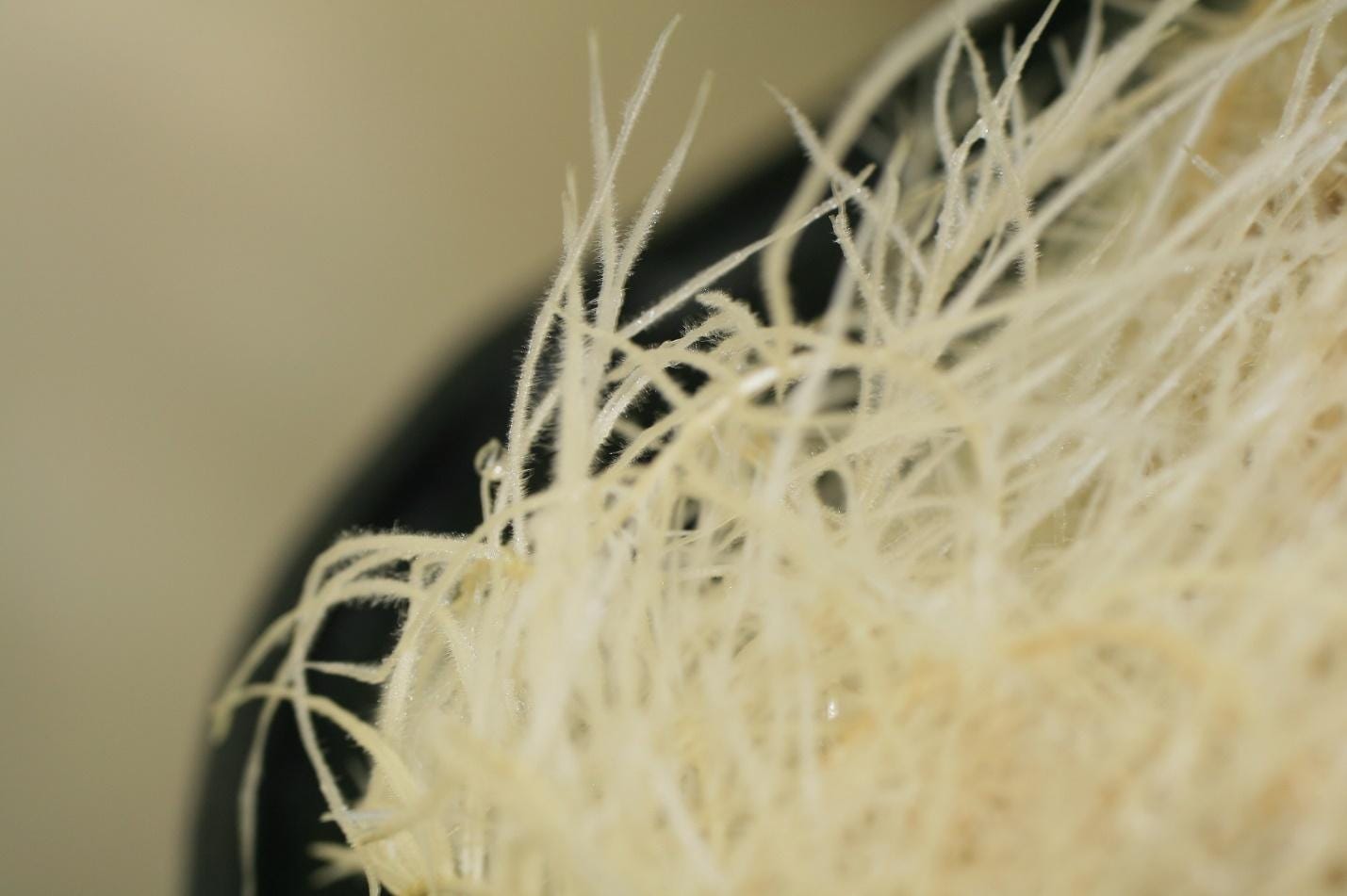
High Pressure Aeroponics (HPA) aka “fogponics,” utilizes external pumps that create a fine mist and much smaller water droplets in the 30-80 micron range, (determined by NASA to be the ideal size for nutrient delivery in studies aboard the International Space Station on aeroponic potatoes in the late 90's). Misting cycles are more precisely controlled with repeat cycle timers to provide the roots access to more Oxygen. Fine hairs called Trichoblasts appear off the spider webs of roots increasing surface area and the roots' nutrient uptake capabilities (see "Aeroponics 2.0" in Maximum Yield Nov. 2015 issue). Critics of HPA note that more challenges exist, and they are correct. If systems are not maintained, nozzles often clog and high temperatures first cause stress in HPA systems, as compared to others. Following the procedures for cleanup and setting up for success will address these challenges and provide the full potential and benefits of HPA.
Clean up
Probably more so with aeroponics than any other style of growing, the cleanup is of vital importance. Successful hydroponic growers know: cleanliness is godliness; and when growing with aeroponics, this statement is even more true because problems such as disease, pathogens and unwanted biology can occur more frequently. With aeroponics, everything happens faster - including problems. Therefore, it is most important to properly clean your aeroponics gear after each harvest. After removing plant material, it is necessary to completely remove all debris and clean the room thoroughly. Sweeping, mopping, and even spraying off the walls with a light bleach or peroxide solution is a good practice.
The most important thing to clean in the room is the system itself. Very much like a hydroponic system, all of the gunk needs to be removed thoroughly from the system and reservoir using elbow grease. It is also very important to clean all of the tubing, nozzles, manifold, pumps etc. A good method is to run hot water with H2O2 (Hydrogen Peroxide) and purge the system of any growth inside the lines. After the system is free of nutrient build up and other debris, repeat this process at least once to ensure it is completely flushed. Then it would be alright to power down and let the system dry out. If the aeroponics plumbing components are allowed to run dry before completing this process, caking of nutrients and gunk inside the plumbing will break off and cause nozzle clogging. This usually doesn't happen until the next crop and can be very frustrating. It can be easily avoided by following this cleaning process.
Conclusion
In controlled environment agriculture, we manipulate as many parameters as possible in order to maximize crop performance. Aeroponics offers cultivators more controlled nutrient and Oxygen delivery than any other style of growing. Although aeroponics may require more maintenance and attention to detail, the potential for increased efficiency, quality, yield and growth rates makes aeroponics a fun and rewarding gardening method with a bright future.